Sylvanas Windrunner is one of the most complex, iconic, and divisive characters in the World of Warcraft (WoW) universe. From her noble beginnings as a high elf ranger-general to her fall as the Banshee Queen, Sylvanas has undergone one of the most dramatic and compelling transformations in Blizzard’s expansive lore. Loved by many, hated by others, and always feared by her enemies, Sylvanas’ journey explores themes of loss, vengeance, freedom, and power. This article delves into the rise, fall, and legacy of Sylvanas Windrunner — the Dark Lady of the Horde.
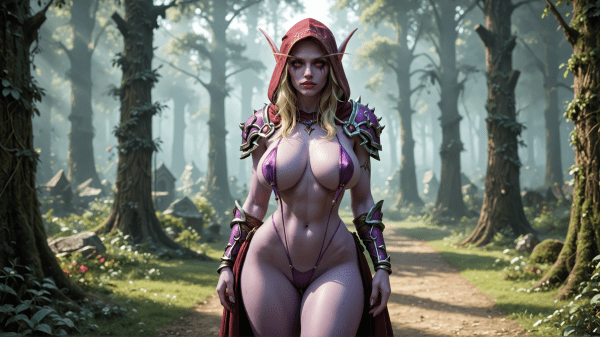
XXL custom mouse or gaming pad – 12 x 18 inches
Origins: Ranger-General of Silvermoon
Sylvanas Windrunner was born into the prestigious Windrunner family of Quel’Thalas, a proud nation of high elves (Quel’dorei). As the middle sister between Alleria and Vereesa Windrunner, Sylvanas was renowned for her sharp mind, fierce will, and extraordinary skill with the bow. She quickly rose through the ranks of the Farstriders, the elite rangers of Quel’Thalas, eventually earning the title of Ranger-General of Silvermoon.
As Ranger-General, Sylvanas was charged with protecting the elven kingdom from outside threats. Her tactical brilliance and valor in battle earned her great respect among her people and solidified her as a hero of Quel’Thalas. She was especially celebrated for her defense of the kingdom during the Second War against the orcish Horde, a conflict that strained the alliance between humans and elves but showcased her tenacity and leadership.
Tragedy and Transformation: Fall of Quel’Thalas
The true tragedy of Sylvanas’ story began during the events of Warcraft III: Reign of Chaos. Arthas Menethil, prince of Lordaeron and recently turned death knight, led a campaign against the high elves to claim the Sunwell, the source of their magical power. Sylvanas valiantly defended Silvermoon and the surrounding lands against the Scourge but was ultimately defeated.
Rather than granting her a warrior’s death, Arthas raised Sylvanas as a banshee, a spectral servant bound to his will. This cruel act — transforming a proud and noble ranger-general into a mindless tool of destruction — was one of the most horrifying examples of Arthas’ cruelty. Sylvanas was forced to witness and participate in the slaughter of her own people.
As a banshee, Sylvanas carried out Arthas’s will with malice, but the experience burned hatred into her very soul. However, when the Lich King’s control weakened following his retreat to Northrend, Sylvanas was among the first of the undead to regain free will. Her burning hatred for Arthas and the Scourge became her defining purpose.
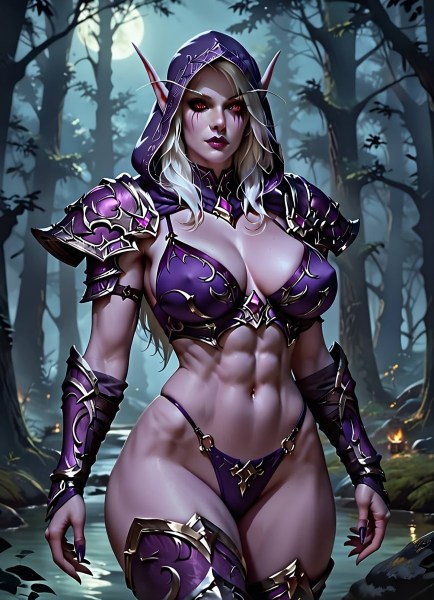
Custom XXL Game Mat – Sylvanas Windrunner
The Birth of the Forsaken
Now free, Sylvanas gathered other undead who had broken free of the Lich King’s control and formed a new faction: the Forsaken. Declaring herself their Queen, she established the capital city of Undercity in the ruins beneath Lordaeron and pledged allegiance to the Horde — a strategic alliance that allowed her people to survive in a world that feared and hated them.
The Forsaken were unique among the living and the dead — shunned by both. Under Sylvanas’s command, they developed a culture of pragmatism, cunning, and moral ambiguity. She became known as the Banshee Queen, a title that reflected both her former torment and her iron grip over death.
Sylvanas was deeply focused on vengeance, both against Arthas and against any force that threatened her people. When Arthas was finally defeated at the Frozen Throne, she was left without purpose. In a moment of despair, she flung herself from Icecrown Citadel to her death — only to be revived by the Val’kyr, servants of the Lich King who now sought a new purpose.
This resurrection forged a new bond: Sylvanas would use the Val’kyr to bolster her ranks and avoid the fate of eternal torment in the Maw, the afterlife domain of the Shadowlands. With her new allies, Sylvanas gained the ability to raise more undead — a power that would later prove central to her controversial decisions.
Warchief of the Horde
Following the death of Warchief Vol’jin during the events of World of Warcraft: Legion, Sylvanas was chosen to lead the Horde. Vol’jin claimed the spirits had guided his decision — a mysterious moment that would have long-lasting implications.
As Warchief, Sylvanas sought to ensure the survival of the Forsaken while expanding the influence of the Horde. However, her reign was marked by secrecy, manipulation, and an increasingly utilitarian approach to power. Her most infamous action came during the prelude to Battle for Azeroth, when she ordered the burning of Teldrassil, the World Tree — home to the night elves.
This act, viewed by many as a war crime, caused a massive rift within the Horde. Some, like Nathanos Blightcaller and loyal Forsaken, supported her unquestioningly. Others, like Saurfang, Baine Bloodhoof, and even Thrall, were appalled.
The burning of Teldrassil was a pivotal moment in Warcraft history. It triggered the Fourth War, drove a narrative of vengeance and rebellion, and painted Sylvanas as a villain in the eyes of many. However, her motivations went deeper than mere conquest or hatred.
Sexy Sylvanas Windrunner with her Blood Elf Concubine – Large mouse pad 12 x 15 inches
Breaking the Chains: The Shadowlands Plot
Behind the scenes, Sylvanas had formed an alliance with The Jailer, an ancient being from the Shadowlands who sought to unravel the cycle of life and death and reshape the cosmos. By causing mass death — like the burning of Teldrassil — she fed souls into the Maw, fueling the Jailer’s power.
Her belief was that the existing system of life, death, and fate was inherently flawed and unjust. She wanted to break the chains that bound mortals to predestined paths — a twisted vision of freedom where all would serve the Jailer but without fear, pain, or torment.
In Shadowlands, this plan came to fruition. Sylvanas shattered the Helm of Domination, opening the way to the Shadowlands and setting the stage for the expansion’s events. Players followed her through realms of death, confronted her motivations, and saw her internal conflict begin to emerge.
Eventually, in the Sanctum of Domination raid, Sylvanas turned on the Jailer after realizing the true cost of his vision. However, it was too late. Her betrayal, countless atrocities, and manipulation had already stained her legacy.
Judgment and Redemption
After her defeat, Sylvanas was taken prisoner and faced judgment in Zereth Mortis. The Arbiter, a cosmic entity overseeing the balance of souls, ruled that Sylvanas must search the Maw for every soul unjustly damned due to her actions — a penance that would take millennia.
This marked a significant narrative turn: not a redemption arc, but a reckoning. Sylvanas did not seek forgiveness, nor did many believe she deserved it. But her punishment served a higher cosmic justice, and it allowed her to begin the long road toward atonement — if not for herself, then for those she had wronged.
In her final moments before departing for the Maw, Sylvanas confronted her past selves — the ranger-general she once was, the banshee she became, and the Warchief that shattered worlds. Each aspect of her identity was scarred, and her future remains uncertain.
Themes and Legacy
Sylvanas Windrunner’s story is layered with tragedy, moral ambiguity, and existential conflict. She embodies several core themes in Warcraft lore:
- The Price of Vengeance: Her life is defined by the quest for vengeance — first against Arthas, then against the cosmos itself. That unrelenting drive both empowered and destroyed her.
- The Question of Free Will: Sylvanas despised servitude. Her alliance with the Jailer — ironically another form of bondage — was rooted in a desire to destroy systems of control.
- Loss and Identity: From high elf to undead, queen to exile, Sylvanas’ shifting identities represent the fragmentation of the self in the face of trauma and transformation.
- The Cost of Leadership: Her time as Warchief is a cautionary tale of what happens when pragmatism overcomes morality, and when power becomes an end in itself.
Her character continues to spark debate in the community. Some view her as a tragic antihero. Others see her as irredeemable. Few deny her impact.
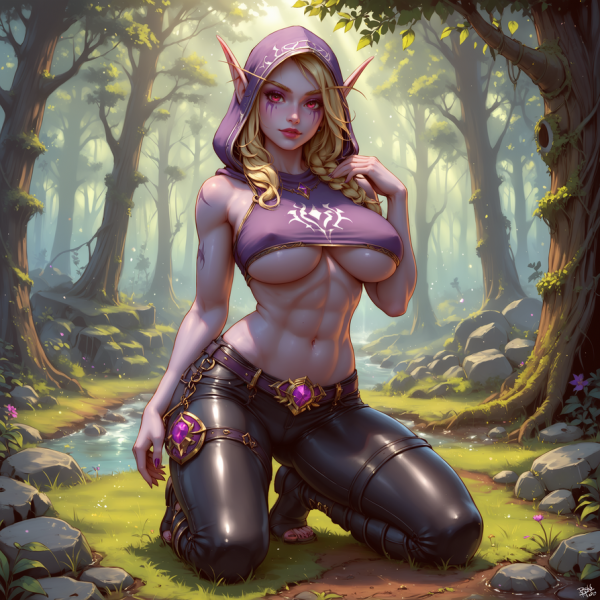
Sexy Sylvanas Windrunner WOW laying on the table – Large Game Pad 12 x 15 inches
Cultural Impact
Beyond the game, Sylvanas Windrunner is one of Blizzard’s most iconic characters. Her design — with her dark hood, glowing red eyes, and haunting voice — is instantly recognizable. Voiced by Patti Mattson, Sylvanas’ voice has become a symbol of defiance, sorrow, and power.
She appears in novels, comics, cinematics, and more. Sylvanas, the novel by Christie Golden, delves deep into her psychology and inner conflicts, offering fans a more nuanced view of her long, dark journey.
Cosplayers, fan artists, and lore theorists are drawn to her story. Whether depicted as the noble ranger or the ruthless Banshee Queen, Sylvanas is a muse for storytelling and imagination across the gaming world.
Conclusion: The Shadow That Remains
Sylvanas Windrunner stands as one of the most compelling figures in fantasy gaming. Her journey from noble protector to vengeful queen and finally to a penitent soul echoes the rise and fall of tragic heroes throughout literature and myth.
Her legacy is written in ash, blood, and shadow — a character who challenged gods, broke empires, and forced both the characters within World of Warcraft and its players to ask difficult questions about morality, justice, and freedom.
Sylvanas may now walk the desolate Maw alone, but her shadow will linger in Azeroth forever.
 Sexy Butt Mouse Pads