Makima, a central character in the anime and manga series Chainsaw Man by Tatsuki Fujimoto, has become one of the most talked-about and enigmatic figures in modern anime culture. Her popularity stems from a unique combination of visual appeal, psychological complexity, narrative mystery, and thematic depth. Here’s a detailed look at why Makima is so popular among fans:
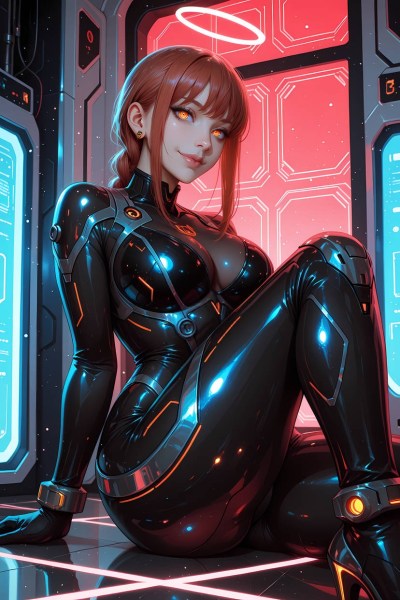
1. Powerful and Mysterious Presence
From her first appearance, Makima exudes control, confidence, and mystery. She’s introduced as a high-ranking Public Safety Devil Hunter with calm authority and a calculating demeanor. Unlike many anime characters who are loud or emotionally expressive, Makima’s composed and soft-spoken style hides an intense and dangerous nature. This contrast instantly intrigues viewers.
- Calm demeanor + extreme power = a magnetic, intimidating presence
- She operates in moral gray zones, leaving fans to constantly question her motives
2. Visual and Aesthetic Appeal
Makima’s design plays a massive role in her popularity:
- Striking red eyes: A signature visual trait that makes her instantly recognizable
- Simple but sharp appearance: Her black suit, white shirt, and braided red hair give off a clean yet commanding look
- Smiling mask: Her polite, gentle smile often conceals ruthless intentions, adding to her psychological allure
Makima represents the “cool beauty” archetype, blending elegance with menace, which is especially compelling in fan art and merchandise.

3. Domination and Control Themes
Makima embodies themes of control, submission, and manipulation, which play into various psychological and even fetishistic fascinations among certain fans. Her ability to dominate others—mentally, emotionally, and physically—makes her:
- A symbol of authority and danger
- A rare example of a female character who is both sexually alluring and fearsome
For many fans, she fits into the “femdom” (female dominance) fantasy trope, often seen in memes and adult fan art, but also deeply explored in how she manipulates the protagonist, Denji.
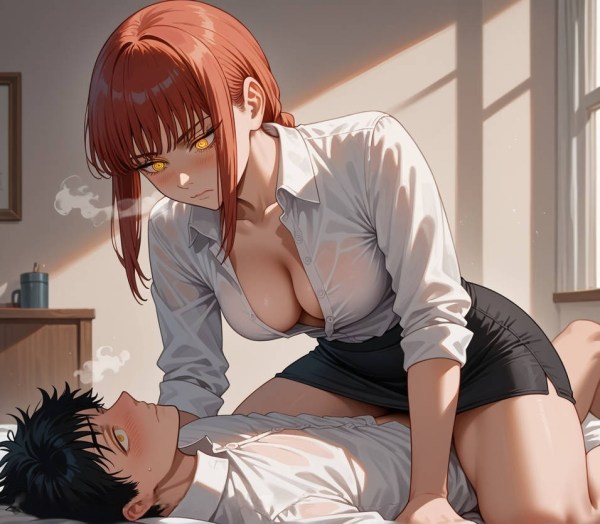
4. Complex Characterization and Ambiguity
Makima is not simply evil or good—she is morally ambiguous. Her motivations are hidden for much of the story, and her actions oscillate between seemingly caring and utterly cruel. This duality keeps fans guessing:
- Is she a savior or a devil?
- Does she care about Denji, or is he just a tool?
This gray morality is a hallmark of Chainsaw Man, and Makima epitomizes it more than any other character.
5. Narrative Role and Plot Importance
Makima isn’t a side character or a fan-service addition—she is central to the entire plot. Her relationship with Denji and her ultimate goals drive the story forward, especially in Part 1 of the manga. As the layers of her character are slowly revealed, she:
- Becomes a symbol of both desire and fear
- Shapes Denji’s identity and trauma
Without Makima, Chainsaw Man would be a completely different story—her presence adds philosophical and emotional weight.
6. Symbolism and Philosophical Depth
Makima represents more than just a powerful woman. She’s often interpreted as:
- A symbol of control and governmental authority
- A representation of manipulative love or toxic relationships
- An embodiment of the idea that desire leads to destruction
Her character opens the door to deeper psychological and thematic analysis, which appeals to fans who enjoy discussing anime on more intellectual levels.
7. Cult-Like Fanbase and Meme Culture
Makima has become meme gold on platforms like Reddit, TikTok, and Twitter (X):
- Phrases like “step on me Makima” reflect a fan culture that romanticizes her dominance
- Her scenes are frequently re-edited, re-voiced, or redrawn in both wholesome and NSFW ways
- Fan art, cosplay, and doujinshi (fan comics) explode whenever she appears on-screen
This level of engagement creates a feedback loop: the more fans talk about her, the more her mythos grows.
8. Contrast With Other Female Characters
Anime often portrays female characters as either cute, sexy, or powerful—but rarely all three at once. Makima breaks the mold:
- She’s cold and calculating, but still seductive
- She’s beautiful, but also terrifying
- She dominates, rather than supports, the male lead
This makes her refreshing and unpredictable, especially in a medium where many female characters follow predictable tropes.
9. Impact in the Anime Adaptation
The anime, produced by MAPPA, gave Makima even more attention:
- Saori Hayami’s voice acting delivered her lines with haunting softness, enhancing her eerie charm
- The animation elevated her scenes with subtle, deliberate movements and chilling pauses
- Her iconic quotes, like “You belong to me, Denji,” hit harder with professional direction and delivery
10. Makima in the Larger Chainsaw Man Universe
Without spoiling too much, her character’s transformation in later parts of the story only deepens her legacy. She becomes:
- A tragic figure in some ways
- A representation of larger cosmic and emotional themes in the Chainsaw Man universe
- A doorway to even more fascinating characters in Part 2 of the manga
Conclusion: Why Makima Endures
Makima’s popularity isn’t a fluke. She’s:
- Visually iconic
- Narratively vital
- Emotionally polarizing
- Symbolically rich
- And undeniably magnetic
Whether fans love her, fear her, or are simply fascinated by her complexity, Makima is a character that refuses to be ignored. In a medium full of unforgettable characters, she stands out as one of the most uniquely constructed—and psychologically charged—figures in modern anime.
 Sexy Butt Mouse Pads